Free Shipping across India
What can we help you find?



The foyer is the short stretch between your front door and the living space: the wall you see the moment the door opens, and the last one you pass on the way out. Call it an entryway or a lobby, it is the same few square feet. Foyer wallpaper works on a simple principle: because nobody sits in this space, its wall can carry a bolder print than any room you actually live in.
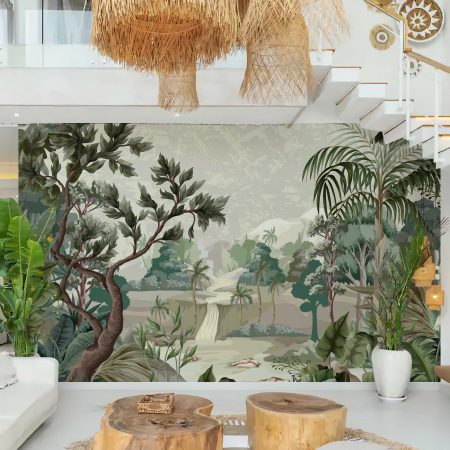
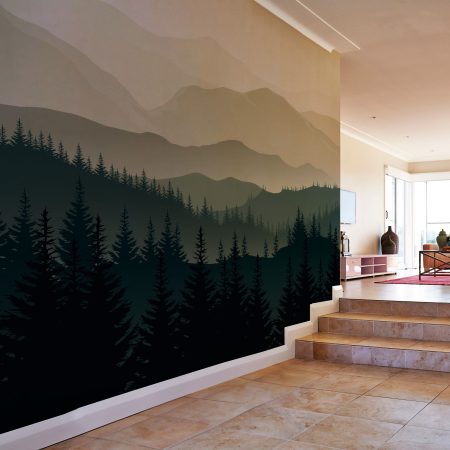
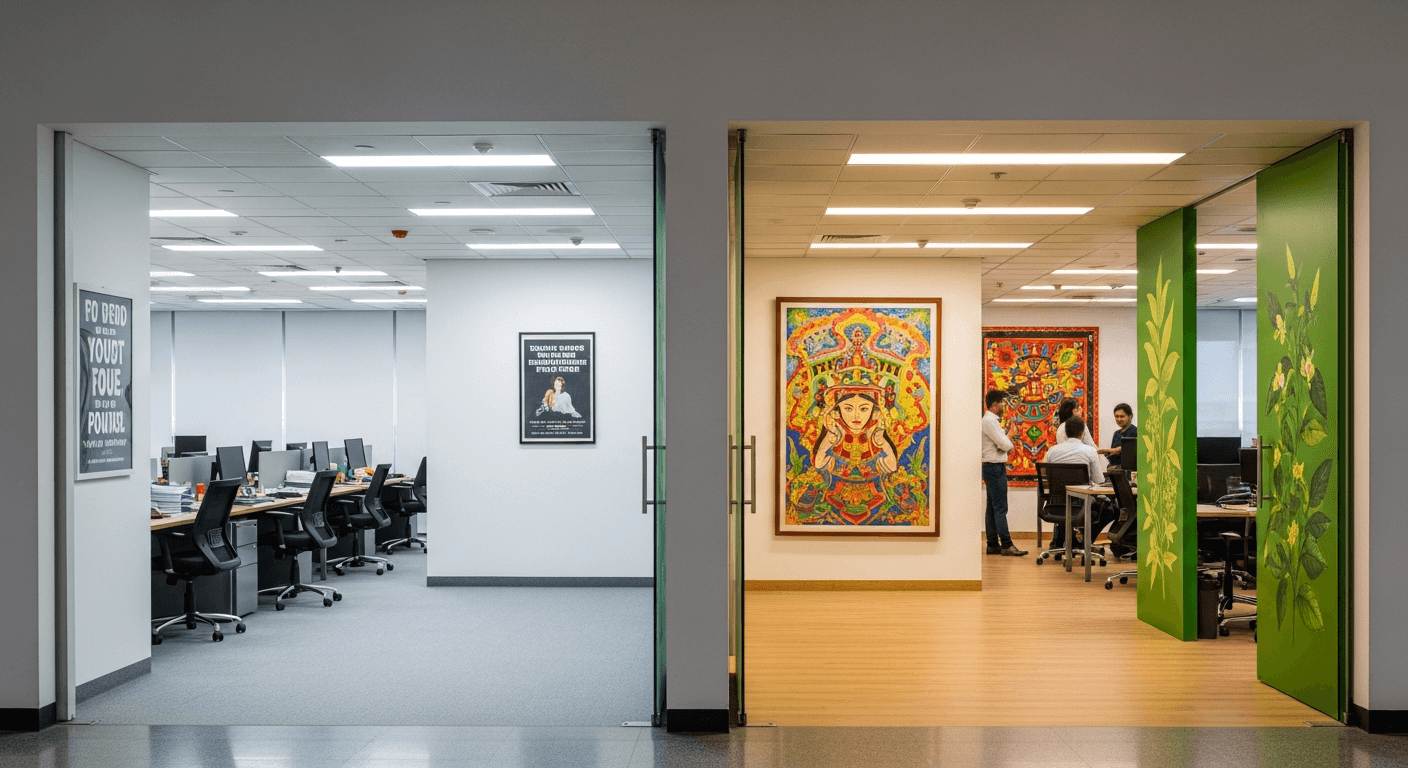
A living room wall gets stared at for hours, so a loud pattern there starts to grate by the second week. A foyer wall is seen in passing, ten seconds at a time, which is why a print like Bauhaus abstraction or The equatorial forest works here and would exhaust you above a sofa. The short visit is the licence. And if you misjudge, you have one small wall to redo, not a whole room.
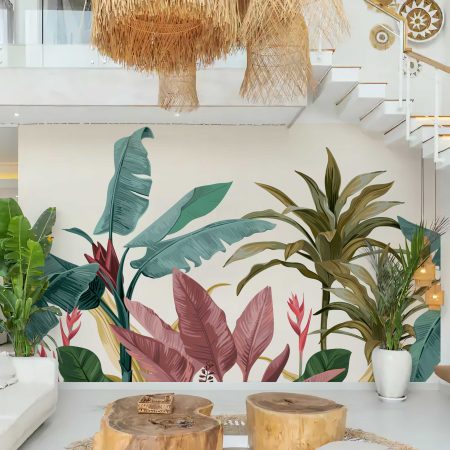
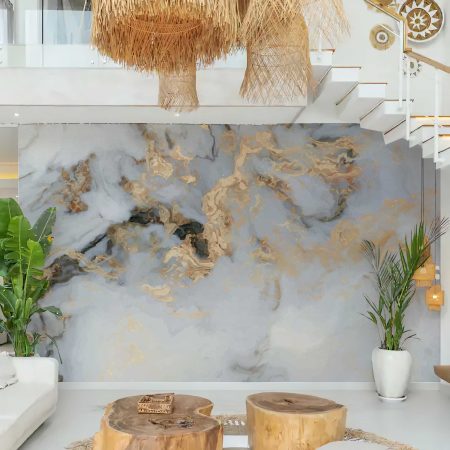
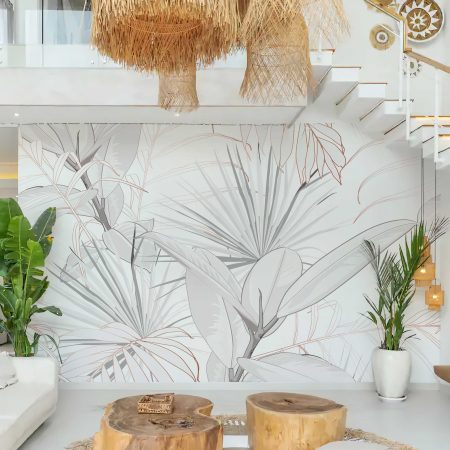
Every design on this page is mural wallpaper, PVC-free and non-toxic, printed to the size of your wall, with prices starting at Rs 129. Neutral stripes and White Marble With Gold Stroke sit at the quiet end of the range; Beautiful Mandala Art and Colorful geometric sit at the loud end. Between them run leafy murals like Golden ginkgo leaves and Rubber plant. To see how these compare with prints made for other rooms, the full wallpaper range is one level up.
Most apartment foyers in Indian metros are passages, 3 to 4 feet wide under a 9 or 10 foot ceiling. The width is fixed, so height is the only direction left to borrow from, and vertical designs do the borrowing. Neutral stripes drawn floor to ceiling stretch the wall upward; Golden ginkgo leaves does the same with climbing stems instead of lines. A wide, scattered print in the same corridor pulls the eye sideways, which in a 3-foot passage is the wrong direction to emphasise.
A full-wall mural such as The equatorial forest treats the wall as a single image, so it needs a clear surface of roughly 5 feet or more to read properly. Repeating patterns forgive interruptions: a switchboard or a shoe cabinet pushed against the wall. On a clear stretch narrower than 4 feet, a mural gets cropped down to a fragment, and a repeat such as Charming floral is the safer order.
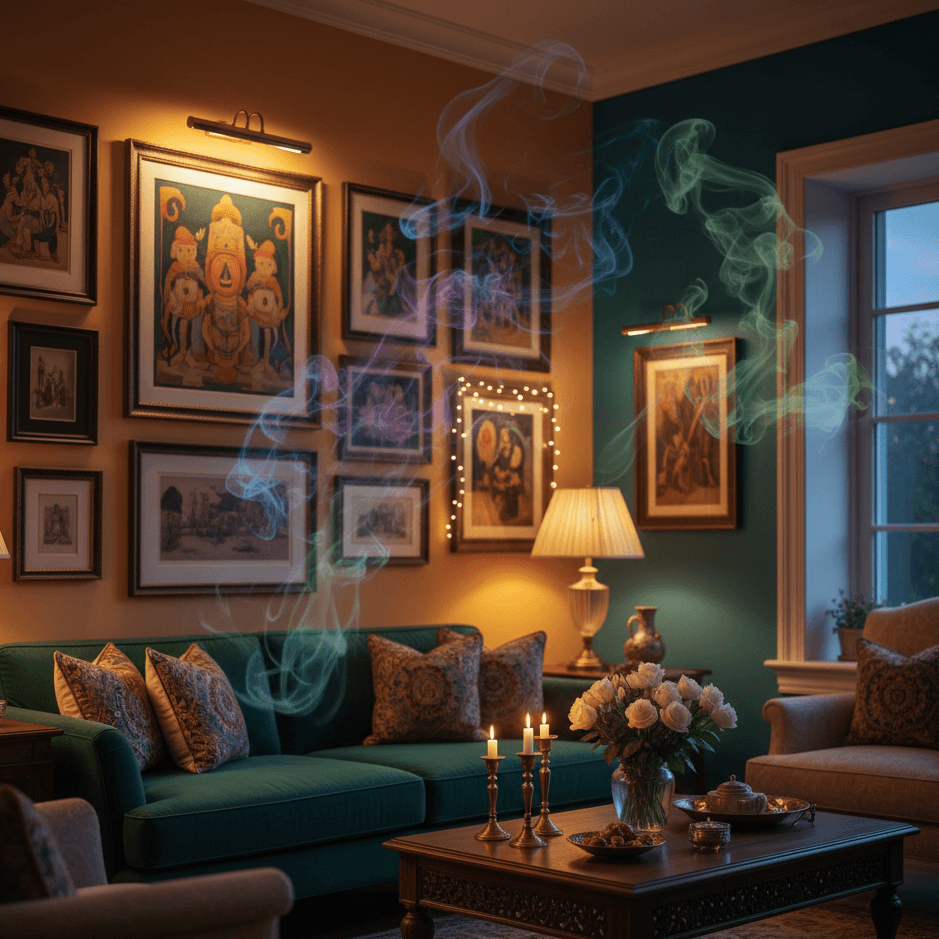
Most Indian foyers get no daylight of their own, and a dark print in a dark passage turns into a black wall by 7 pm. Two fixes work together. A mirror on the wall facing the paper doubles the print and bounces whatever light reaches the passage. A single warm bulb, 2700K rather than cool white, keeps golds and creams honest; White Marble With Gold Stroke and Mountain's fresh air both go flat and grey under a blue-white LED.
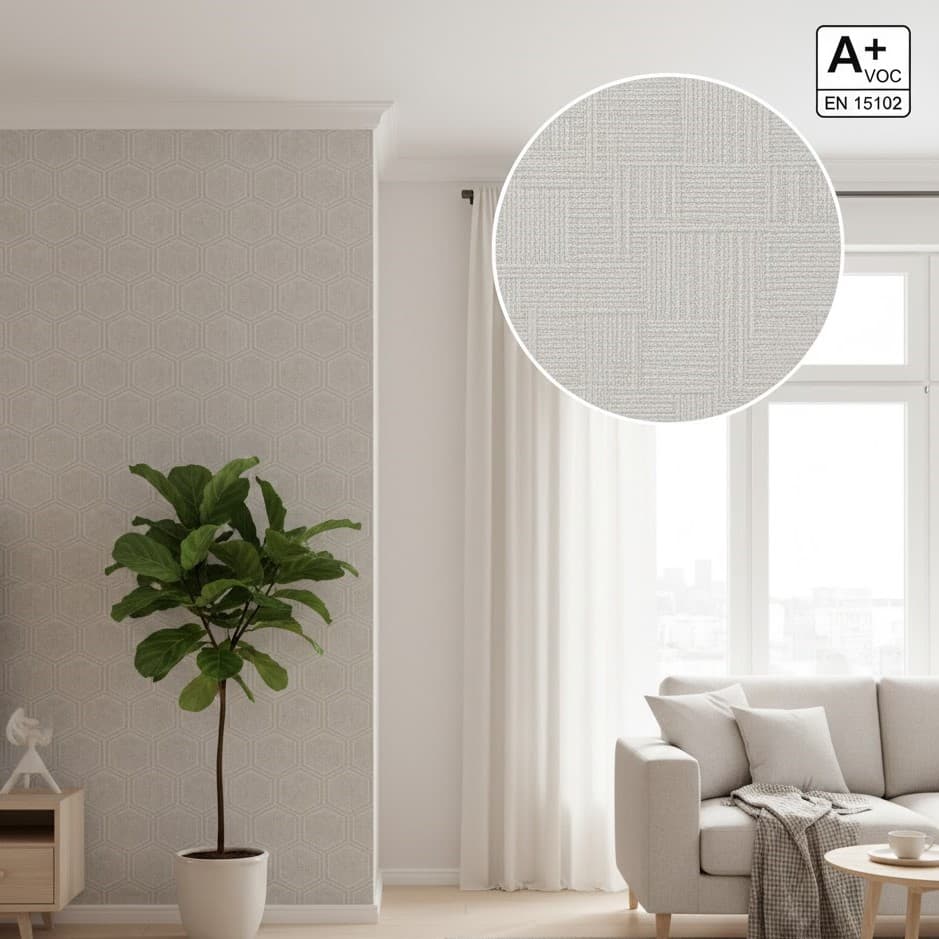
The scuff zone in an entry runs from roughly 24 to 40 inches off the floor, the band where a school bag drags past on the way out and a wet umbrella leans through the monsoon. A patterned surface hides marks at that height far better than flat paint does. Dust that blows in each time the door opens also shows less on print than on a plain pale wall. And because every covering here is PVC-free and non-toxic, that is one thing less to think about in the least ventilated corner of the house.
A slim console, 12 to 14 inches deep and about 30 inches high, is as much furniture as most foyers can hold, and the paper behind it does the decorating. If you hang wall art above the console, keep the frames plain; a patterned ground under an ornate frame is two things shouting at once. Centre small pieces at about 57 inches from the floor, standing eye height, since nobody views this wall from a chair.
From most front doors you can see straight through to the seating beyond, so the foyer wall and the room it opens into share one sightline. The easiest link between them is a single repeated colour. If your living room leans warm neutrals, choose a foyer print with the same undertone rather than a cooler rival. The same rule holds where the entry feeds the dining room: a green picked out of The equatorial forest and repeated in the dining chairs looks deliberate, while the same green against a maroon feature wall looks like an accident.
Measure the wall's width and height in feet at their widest points and add an inch or two each side for trimming. Because each mural is printed to the measurements you give and shipped free across India, there are no half-used rolls left over, which is where conventional wallpaper budgets usually go wrong. A typical foyer wall of 6 by 9 feet is a small, contained project: one surface and one print, pasted in an afternoon.
Stand at your open front door and look at the first wall your eye lands on. That wall, usually 40 to 70 square feet, is the entire project, and it is the cheapest way to test whether patterned walls suit your home before committing a bedroom or a hall to them. If the foyer print still pleases you after a month of walking past it twice a day, you will know exactly how brave to be with the next room.