Free Shipping across India
What can we help you find?




The kitchen is the hardest room in an Indian home to wallpaper, and that constraint is the design brief. Steam rises off the pressure cooker for an hour a day, and turmeric finds every surface within arm's reach of the hob. Kitchen wallpaper works when you choose the wall before the print: a wipeable, PVC-free surface on the one wall the cooking cannot reach, in a pattern that forgives daily wear. This guide covers where that wall is and what survives on it.
Most kitchens offer only one honest candidate. Cabinets and tiles claim the platform side and the window claims another, so the print usually goes on the wall facing the platform, or on the short wall beside the fridge that you see first from the doorway. In an open kitchen, the best wall is the one visible from the sofa, because it turns the kitchen from a service corner into part of the room. A breakfast nook is the other natural spot, since the wall behind a small table takes no cooking abuse at all.
Never paper the wall directly behind the hob. That strip takes oil at frying temperature and daily scrubbing, and no printed surface should be asked to do a tile's job. Keep wallpaper at least 2 feet clear of the burners on either side and let the chimney and a glass or tile backsplash handle the splash zone. The paper goes where spatter cannot physically land, which in most kitchens still leaves the largest and most visible wall free.
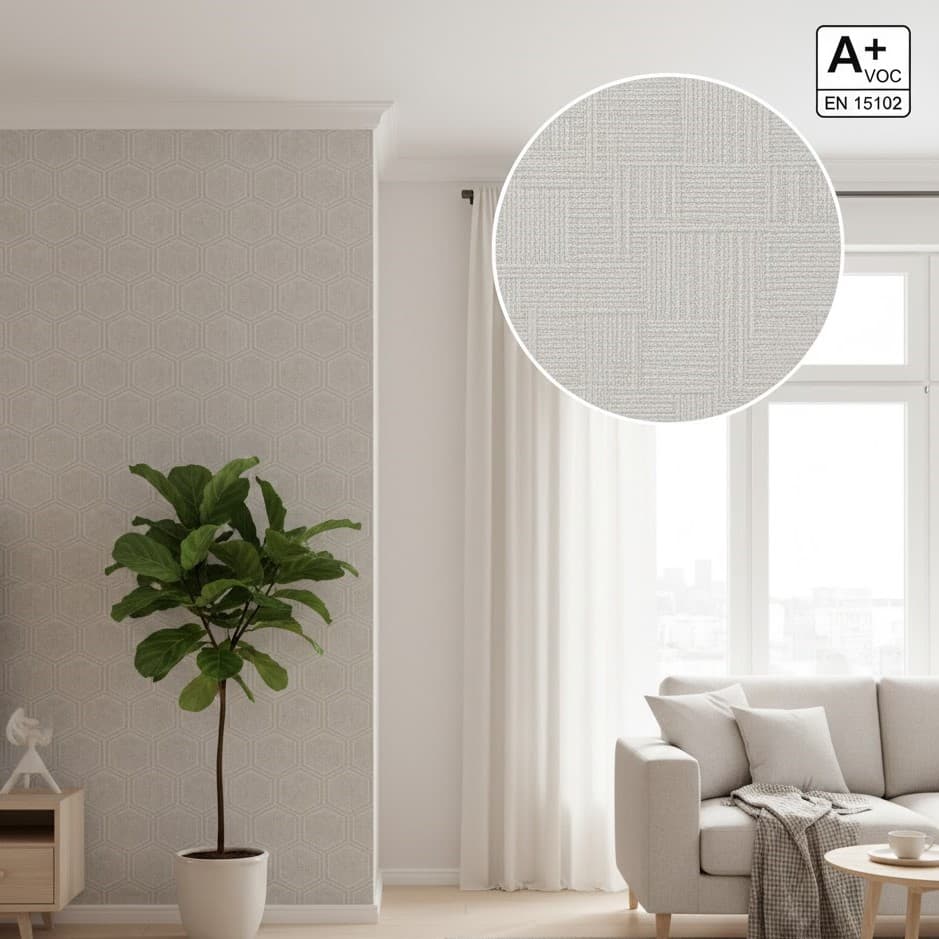
Every design in this collection is printed as a PVC-free, non-toxic wall covering, which matters in the one room where food sits out uncovered. Wipeable means a damp cloth removes the film that steam and light spatter leave over a month, without lifting the ink. It does not mean scrub-proof: run the chimney while frying and the wall stays a wiping job rather than a scrubbing one. If you are weighing wallpaper for kitchen walls against an ordinary bedroom print, this surface behaviour is the difference between them.
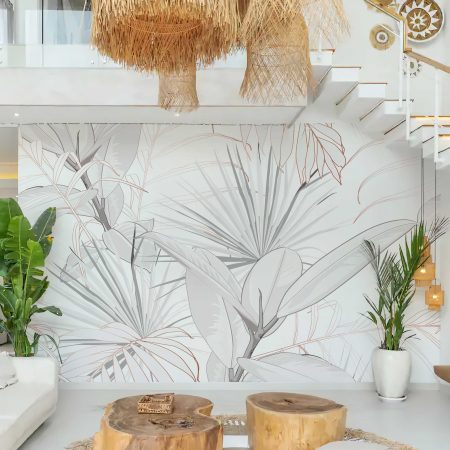
A kitchen wall picks up fingerprints near the switchboard and shadows above the counter, so flat pale colours show their age fastest. Mid-tone, busy prints do the hiding for you. Vintage floral pattern and Charming floral carry enough detail that a scuff disappears into the design, and Colorful geometric does the same with straight lines instead of petals. Neutral stripes is the safer pick for a kitchen that already has patterned tiles, since two competing patterns in an 80 square foot room is one too many.
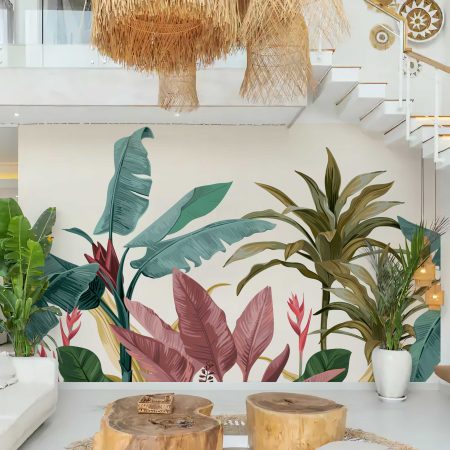
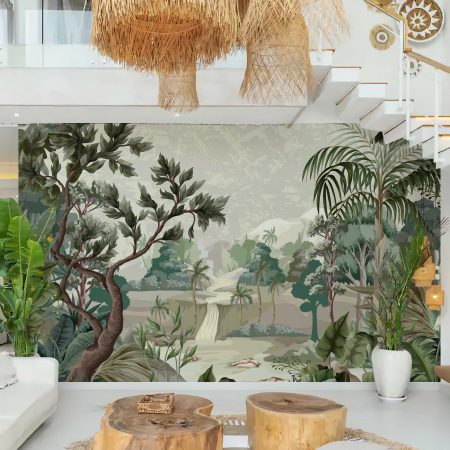
Most Indian kitchens arrive with their palette fixed by black or grey granite and steel on open racks, with cabinet shutters covering the rest. Warm prints work against that backdrop. Golden ginkgo leaves sits well beside wooden shutters, and green murals like Rubber plant or The equatorial forest give the room the one thing granite never will, which is something alive to look at while the dal simmers.
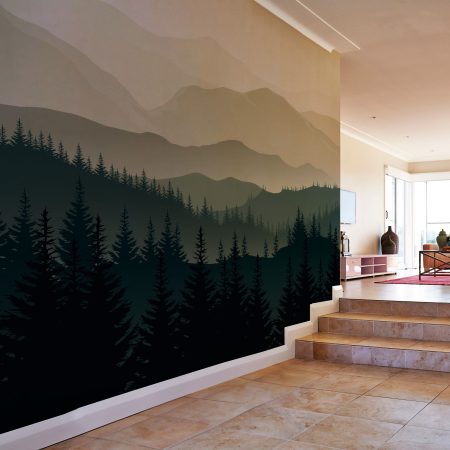
A typical Indian kitchen runs 8 by 10 feet, and the visible wall may be only 4 or 5 feet tall once cabinets and counters take their share. On a small wall, one large motif beats a tiny repeat: a single scene like Mountain's fresh air or the Birdy peacock jungle landscape wall mural makes the wall read like a window, while a small busy repeat can crowd the same space. Vertical designs such as Neutral stripes pull the eye up the full height and make a low kitchen feel taller.
Most kitchens open onto the dining table, and the two walls get judged together. The easiest tie is one family across both: a bold botanical in the kitchen and a quieter print from the dining room collection across the table, matched by palette rather than by repeat. If the dining wall already holds a crockery unit or framed art, keep the kitchen print bolder and let the dining side rest.
In an open-plan flat the kitchen wall appears in every photo taken from the sofa. Stand where guests sit and check whether the kitchen wall competes with the living room wall behind the TV. One patterned wall per sightline is a reliable rule, so if the living area already carries a mural, give the kitchen a quieter stripe or a small floral.
Designs in this collection are listed from Rs 129 and printed to measure, so you pay for your wall's dimensions rather than for a fixed roll size. Measure the wall's width and height in feet and the print is produced for exactly that area. Shipping is free across India. If nothing here fits, the full wallpaper range carries the same made-to-measure printing across every room's collections.
Two checks save a reorder. Measure after the chimney and cabinets are in rather than from the floor plan, because a 10 foot wall with a 2 foot chimney duct is an 8 foot wall. Then judge colours under the room's finished lighting: a warm yellow ceiling light pushes a white ground towards cream, which flatters florals and dulls greys.